

Semi-automatic platform combines electronic fire control, a five-round magazine and different programmable projectiles, but still requires further evaluation before possible military adoption
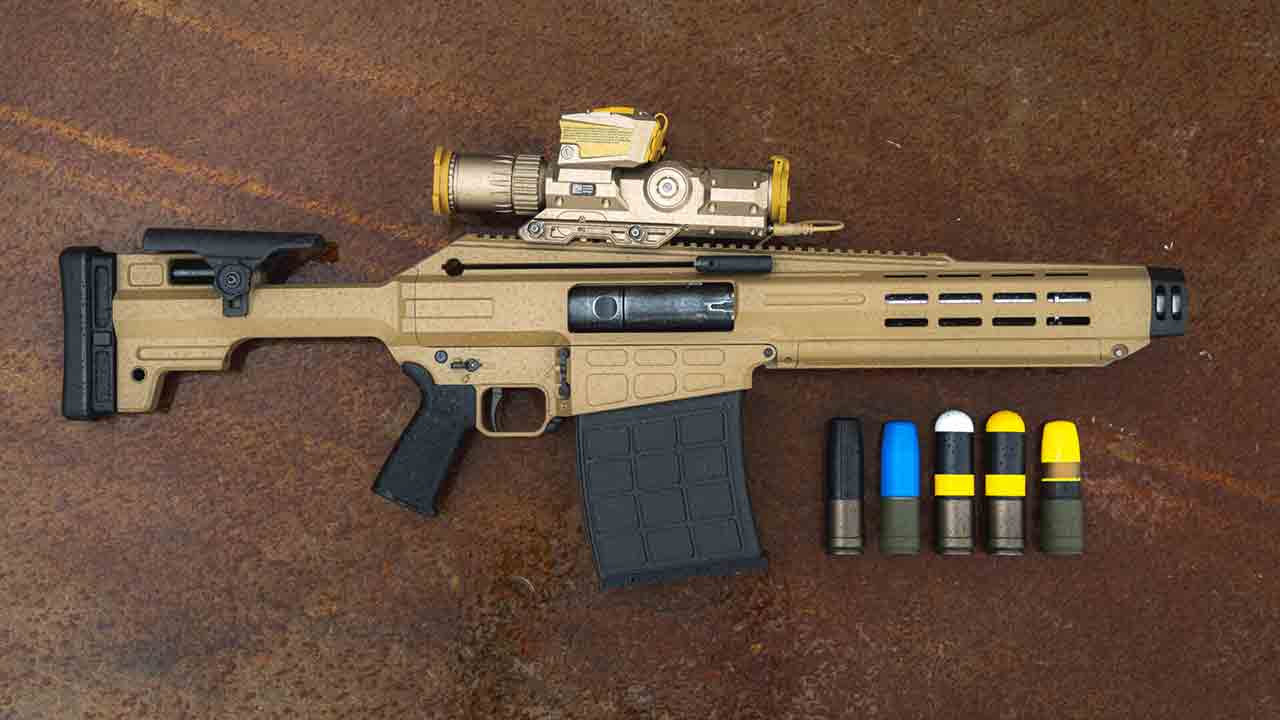
Barrett has unveiled a new configuration of the Precision Grenadier System, known by the acronym PGS, a portable 30 mm system developed to expand the support capabilities available to small military units.
+ AK-12 Model 2023 completes new round of testing as larger batch is delivered to Russia
The equipment combines a semi-automatic platform, electronic fire control and dedicated ammunition in a single package. According to the manufacturer, the PGS was designed to engage targets located more than 500 meters away, including positions protected by obstacles and small unmanned aerial systems.
Although the company describes it as a “grenade rifle,” the PGS is closer to an integrated weapon system than to a conventional launcher. The fire-control system calculates the necessary ballistic corrections and can program certain types of ammunition to produce the intended effect near the target.
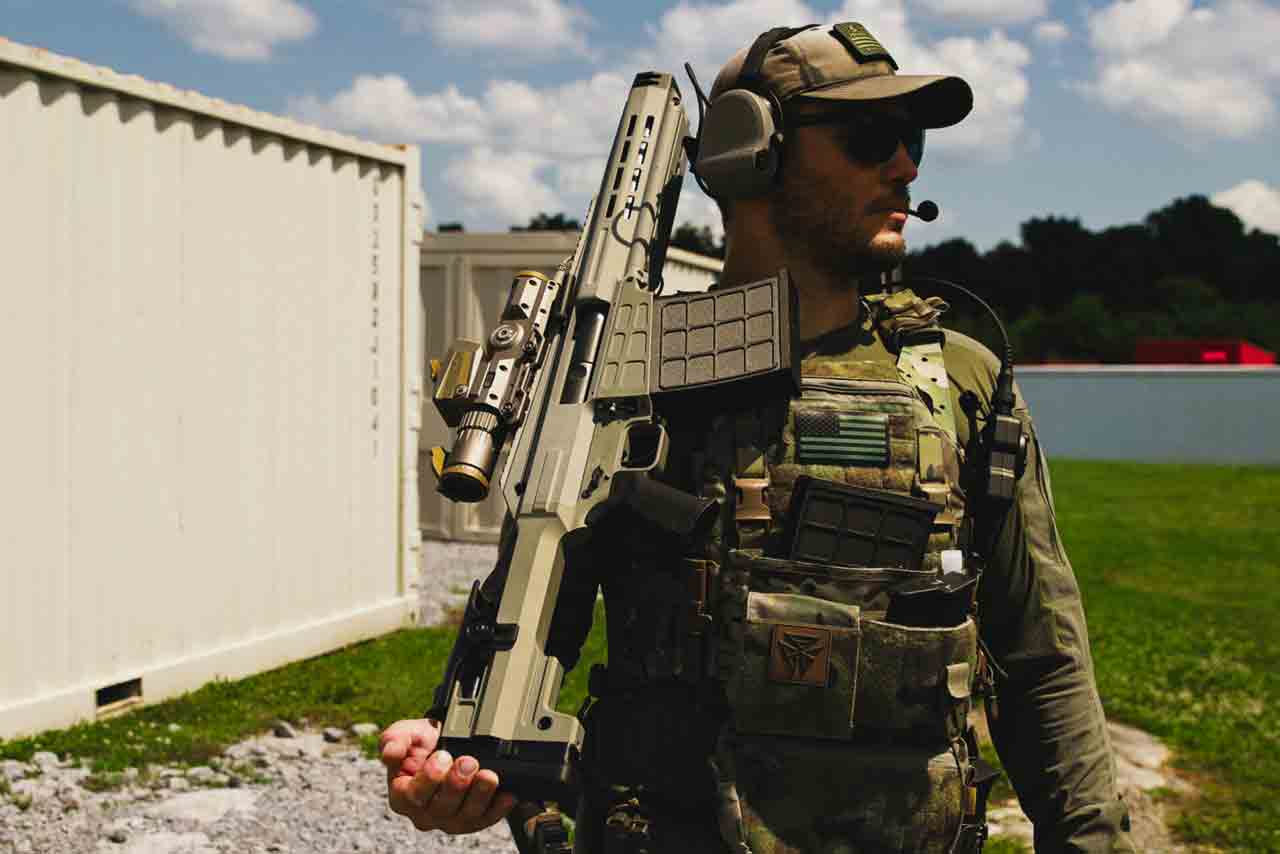
Barrett’s technical page states that the current configuration measures approximately 86 centimeters, weighs 6.3 kilograms and uses a magazine with a five-round capacity. The barrel is 305 millimeters long. Its relatively high weight highlights one of the main challenges facing this type of equipment: balancing firepower, recoil control and operator mobility.
System originated from a US Army program

The project is the result of a collaboration between Barrett, MARS Inc., AMTEC Corporation and Precision Targeting. MARS was selected in May 2025 as the winner of the xTechSoldier Lethality competition, organized by the US Army to evaluate proposals for the Precision Grenadier System program.
During the competition, prototypes were required to be portable, magazine-fed and capable of semi-automatic fire with greater accuracy than traditional grenade launchers. Practical demonstrations were conducted between February and April 2025.
Winning the xTech process, however, does not automatically mean that the equipment will be adopted by the US Army. The system was selected as a potentially viable solution for continued evaluation and improvement before a possible competition or contract under the final military program.
Different ammunition types for a single platform
One of Barrett’s main arguments in favor of the PGS is its ability to use a family of 30 mm ammunition adapted to different scenarios.
The HEAB version uses programmable airburst detonation and was designed to engage targets positioned behind obstacles. The HEDP, which is still under development, combines a high-explosive effect with a capability against light protection.
To counter drones, the system includes the HE Prox, equipped with a proximity fuze, and the ADS, described as a dispersal munition intended for missions against unmanned aerial systems. The range also includes the CQB, designed for shorter distances.
This variety is intended to prevent operators from having to carry different platforms for each type of threat. On the other hand, the proposal increases logistical complexity because it requires the availability of specific ammunition, proper integration with the fire-control system and training to correctly select each configuration.
Portable, vehicle-mounted or unmanned-system operation
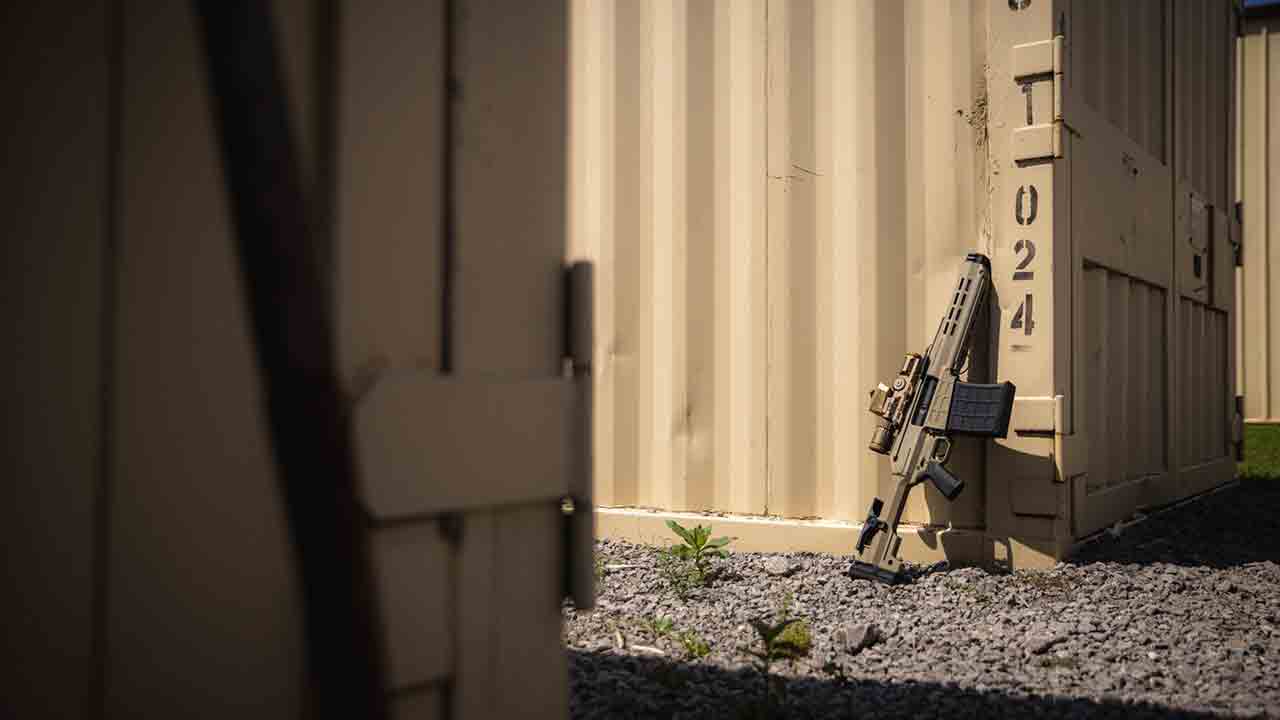
In addition to shoulder-fired operation, Barrett is studying versions installed on vehicles and remotely controlled weapon stations. The architecture was also designed for future integration with autonomous or unmanned platforms.
The company has announced a gradual development strategy. The Mod 0 configuration was scheduled for 2026, featuring fire control, a five-round magazine, a recoil-reduction system and four types of projectiles. The Mod 1, planned for 2027, is expected to expand the system’s counter-drone capability with proximity-fuzed ammunition. A future Mod 2 is intended to incorporate the features required by the US Army’s final program.
The concept responds to growing demand for systems capable of engaging protected targets and countering small drones without immediately relying on vehicle-mounted weapons or support from larger units. The US Army believes that platforms in this category could bring more precise support capabilities directly to squad level.
Even so, performance during demonstrations does not eliminate questions regarding weight, the cost of programmable ammunition, maintenance of the electronic fire-control system and the number of projectiles each service member will be able to carry. These factors are likely to determine whether the PGS progresses from a technically promising platform to a system produced and deployed on a large scale.
Source and images: Barrett
